














13-November-2026:
As schools mark Children’s Day on 14 November, a finding from the rural ASER 2024 survey deserves attention. In government schools, 23.4% of Class 3 children assessed could read a Class 2 level text, up from 16.3% in 2022. The improvement matters. So does the size of the group still below that reading benchmark when the survey was conducted.
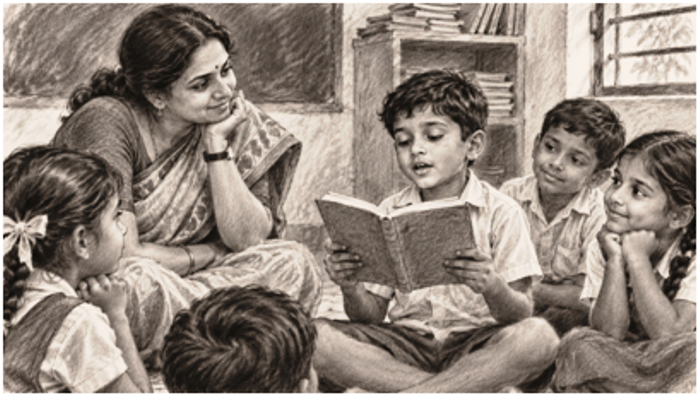
A child who struggles to read a short passage may also struggle to follow written instructions in an arithmetic exercise or understand a question on a test. The difficulty can stay hidden in a class that answers aloud in chorus. Asking a child to read briefly one to one gives a teacher information that a whole-class exercise rarely provides. It can also show whether the obstacle is recognising words, reading fluently or understanding the language used in the text.
District education officers should help schools set aside daily reading time and give teachers suitable texts in languages children understand. Use short individual checks to identify where a pupil needs help, teach in small groups where possible and repeat the assessment after a defined interval. Discuss individual results privately with families and use aggregate results to direct additional support to schools.
Head teachers should review progress during the term and set a plan for children who have made little headway. This year’s Children’s Day programme can end with a clear commitment from each school about when it will next listen to those children read.