







By Dr. Sonia Soni, Head of Career Guidance, at Aditya Birla World Academy
For many families, the aspiration of sending their child to a top university abroad—be it an Ivy League college or a prestigious institution in the UK, Canada, or Singapore—is deeply cherished. Yet, what often remains underestimated is the planning and preparation that must begin not at the application stage, but years earlier. The truth is, while academic excellence remains vital, the world’s best universities are increasingly looking beyond marks. They are seeking thinkers—students with curiosity, creativity, character, and the ability to contribute meaningfully to a diverse academic community.
As a university placement advisor, I regularly interact with parents who equate high scores with guaranteed acceptance into international universities. However, the most competitive institutions assess applicants holistically. Rigorous academic transcripts matter, yes—but equally important are essays that reflect critical thinking, teacher recommendations that highlight integrity and leadership, and portfolios that demonstrate genuine interest and initiative.
This is where choosing the right curriculum becomes pivotal. An education system that emphasises inquiry over rote learning, encourages research-based projects, interdisciplinary understanding, and real-world application gives students an undeniable edge. It’s not simply about being in the ‘right board’—it’s about how that curriculum is implemented and how well it prepares students for the academic and personal demands of university life abroad.
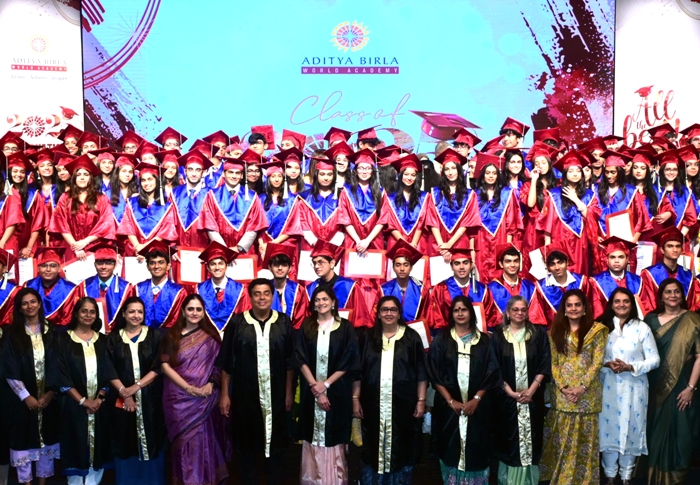
At Aditya Birla World Academy (ABWA), for instance, students can choose between the A-Level and the IBDP curriculum—both globally respected and academically rigorous. But more importantly, both are designed to build independent learners. Whether it’s through Extended Essays, Theory of Knowledge, or interdisciplinary research projects, students are constantly challenged to think, reflect, and reason. The result? Over 85% of ABWA’s students have secured placements in globally ranked universities year after year—a testament to a system that prioritises depth over superficial excellence.
Beyond curriculum, schools must also offer platforms that encourage exploration beyond academics. Activities like the Creativity, Activity, Service (CAS) component of the IB programme, student-led clubs, community service, internships, and global exchange programmes are essential. Not only do these enrich university applications, but they also shape students into balanced individuals with broader worldviews—exactly the kind of candidate that top universities value.
For parents, there are critical watch-outs. Pushing children toward a curriculum they are not naturally inclined toward can backfire. So can choosing a school based solely on board affiliation rather than pedagogical philosophy. It’s important to align your child’s strengths with the right curriculum and to choose institutions that focus on holistic development, not just academic performance.
Equally important is preparing children for independent life. University abroad is not just a test of academic capability—it’s a test of emotional resilience, time management, cultural adaptability, and self-motivation. In our placement office, we coach students on everything from writing compelling personal statements to managing homesickness. Families must invest time in building life skills: budgeting, basic cooking, navigating public transport, and managing stress.
To students dreaming of studying abroad: start early. Engage in activities that spark your interest—not just for the sake of your CV but because they develop your character. Develop writing and communication skills. Seek feedback, revise relentlessly, and take ownership of your learning journey. Build relationships with your teachers—they are your future referees. And most importantly, don’t chase prestige blindly. Choose universities where you will thrive.
Ultimately, success at a university abroad hinges on preparation, not just in the classroom, but beyond it. With the right guidance, the right academic environment, and a mindset geared towards growth rather than perfection, the dream of a world-class education is well within reach.